news
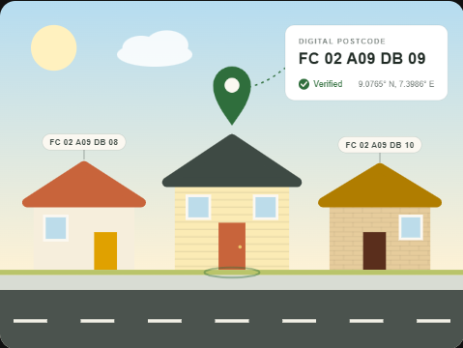
Calling innovation hubs
NIPOST, working with ONDI, invites innovation hubs to apply for access to the Digital Postcode API and access tokens. Read more here
news
NIPOST, working with ONDI, invites innovation hubs to apply for access to the Digital Postcode API and access tokens. Read more here

A dispatch rider circles the same street in Ojota for the third time, phone pressed to his ear. "Beside the blue gate," the customer says. "Opposite the transformer, before you reach the borehole." He turns back the way he came. Ten minutes pass before he finds the house, and by then the food is cold, and the customer is annoyed. That's the reality behind Nigeria's push for a new kind of postcode.
Nigeria is introducing a new alphanumeric postcode built to pinpoint individual buildings. A conventional six-digit postcode identifies a broad postal area. The new postcode combines letters and numbers to narrow a location from the state or territory down to a specific building.
A postcode may look like this:
FC 02 A09 DB 09
Each section represents a different geographical level.
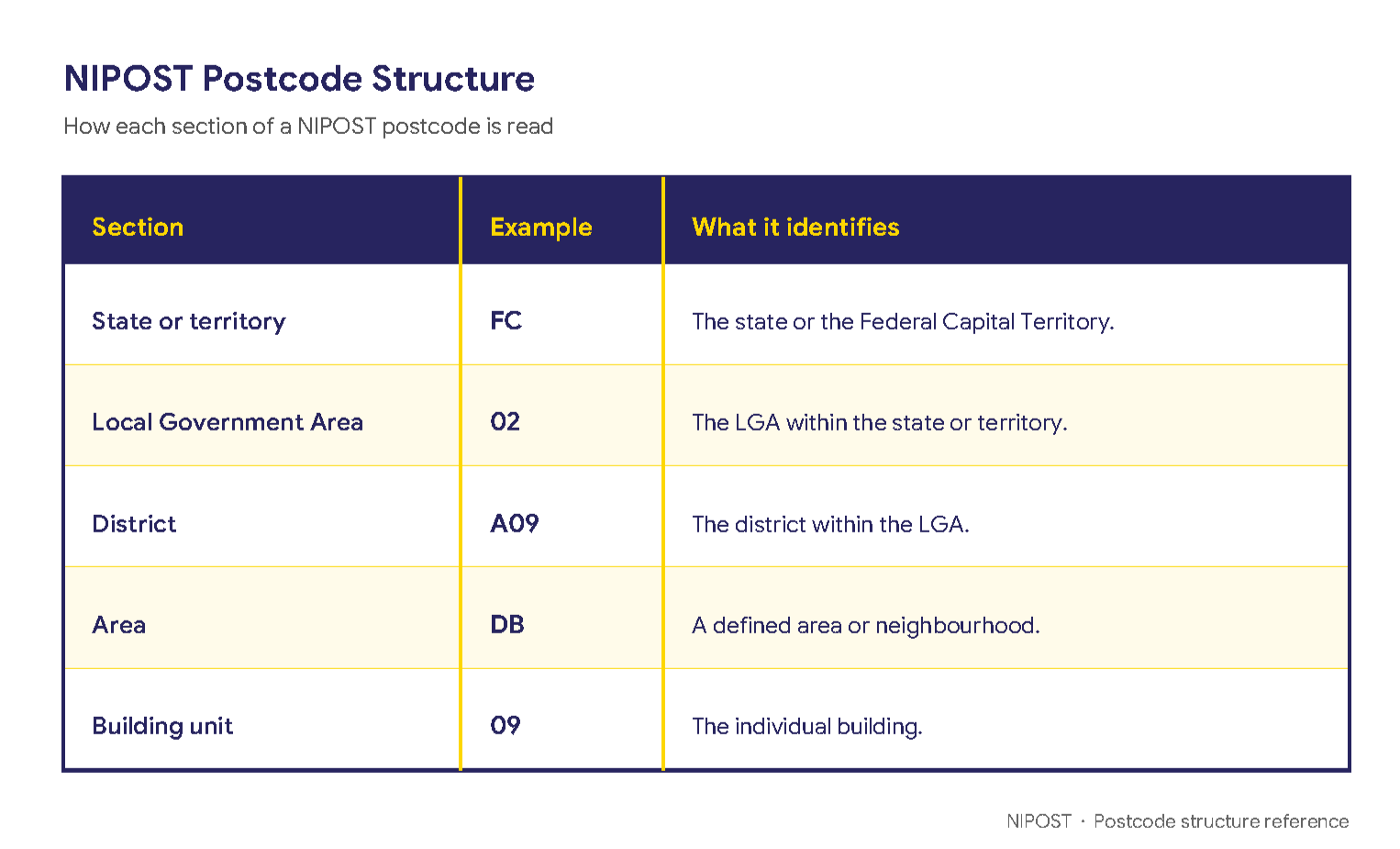
Read from left to right, the code moves from the widest geographical area to the individual building. The new postcode gives people, businesses and public institutions a standard digital reference to find, share and verify buildings more accurately.
Nigeria's existing addressing system struggles to pin down individual buildings. A conventional postcode can cover a large area containing several streets and thousands of buildings. Even when a street name and house number are provided, a visitor may still need more directions like:
These directions work for people who already live in the area, but aren't very useful on delivery platforms, financial institutions, and government databases. The new postcode gives every mapped building a consistent location reference. Instead of identifying only a district or delivery area, it points users to the specific building they are trying to find.
The first two characters of the postcode identify the state or the Federal Capital Territory.
For example, FC represents the Federal Capital Territory in the sample postcode FC 02 A09 DB 09.
Each state will have its own approved two-character code.
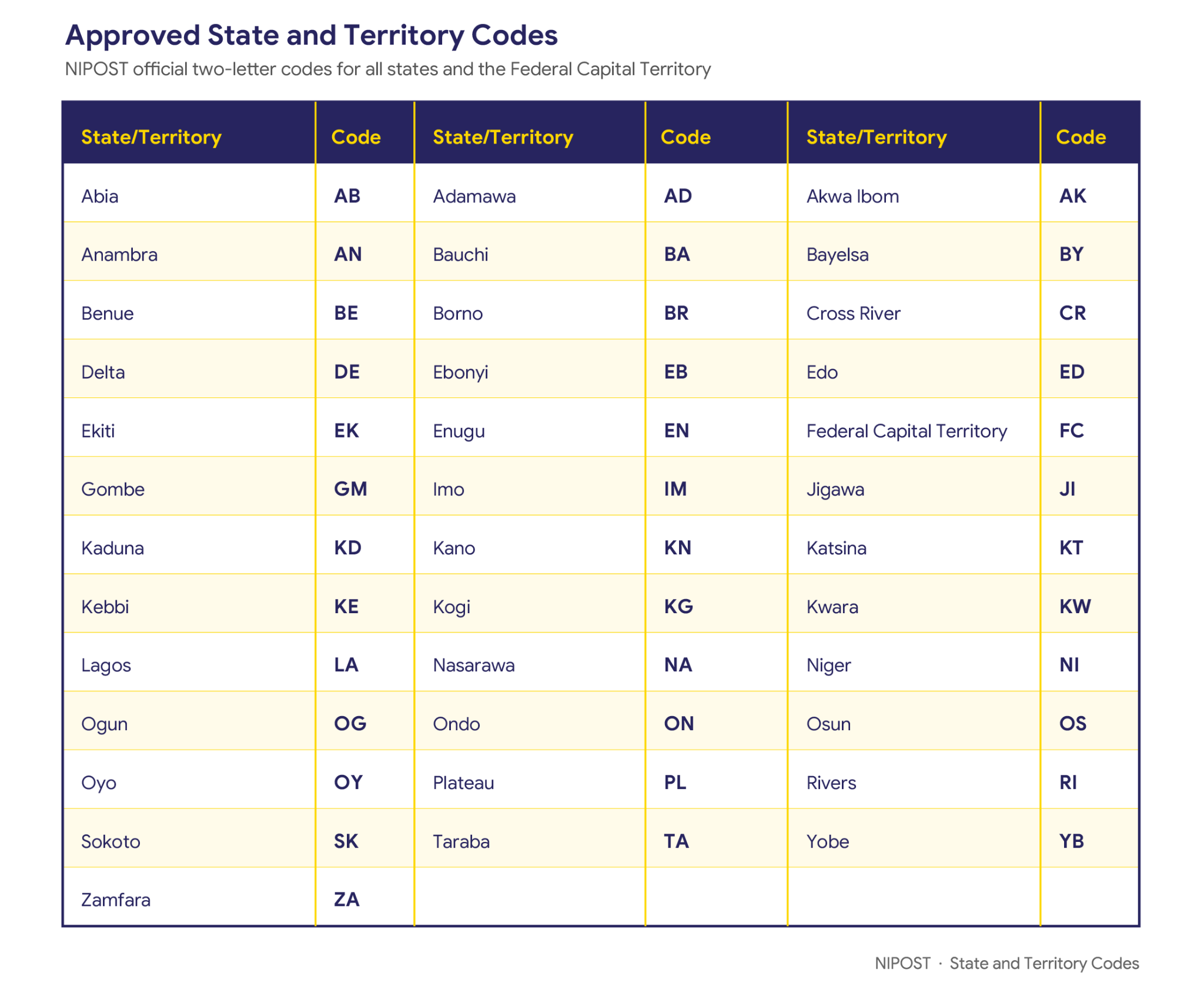
The state or territory code is only one part of the complete postcode. The remaining characters narrow the location down to the relevant LGA, district, area, and building.
The main difference is the level of detail.
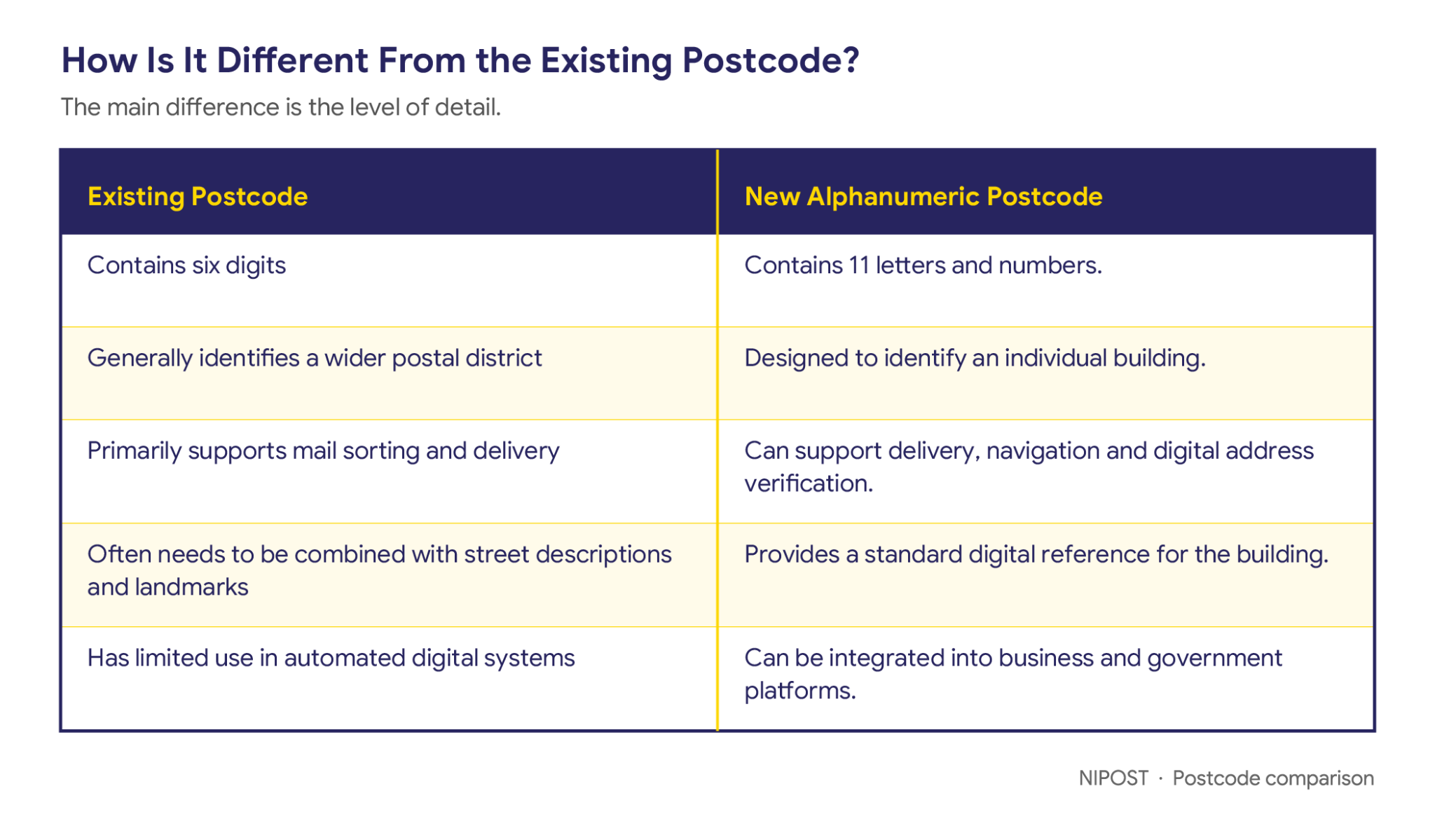
The new postcode works alongside familiar address information such as a street name, community or city, adding a precise digital reference that makes the address easier to locate and verify.
For example, a complete address could include:
Plot 15, Example Street, Wuse 2, AbujaPostcode: FC 02 A09 DB 09
The written address provides context, while the postcode points to the corresponding building.
From the official postcode app or web app, you can search for a building and view its assigned postcode. Depending on the available information, you may be able to find a postcode by:
Once you find the correct postcode, you can save or share it directly from the platform.
Always confirm that the building displayed on the map is the correct one before using or sharing its postcode.
If your building does not have a postcode, you can request one through the Nigerian Digital Postcode app. The request allows your building to be added to the postcode system so that it can receive an official postcode.
For a step-by-step guide on how to request a postcode for a building, read How to Get a Postcode for a Building That Does Not Have One.
Do not create or guess a postcode for your building. Use the official postcode platform to request and confirm the correct code.
Businesses and government institutions can integrate postcode services into relevant digital systems through approved integration tools.
Potential uses include:
Organisations interested in early integration can register their interest while the developer portal and business integration services are being finalised.
The postcode app and website are scheduled to launch on October 1, 2026.
The new alphanumeric postcode gives Nigerians a precise and consistent way to identify buildings. It reduces dependence on long directions, repeated phone calls, and informal landmarks by giving people and systems a digital code they can understand.
Delivery riders will no longer need directions like "beside the blue gate." When the platform launches, you can find your building’s postcode, save the postcodes of important places, and share accurate locations more easily. The postcode will point straight to the building you are looking for.

The Nigerian Postal Service (NIPOST) wishes to inform our esteemed customers of a recent policy change by the Government of the United States of America, enacted through the Executive Order on “Suspending Duty-Free De Minimis Treatment for All Countries” under the International Emergency Economic Powers Act (IEEPA).
This Executive Order applies to all postal operators and designated postal administrations worldwide. The payment of the additional duty affects all global postal inflows into the United States, not just those from Nigeria.
With effect from 29th August 2025, and in compliance with the Executive Order:
NIPOST is actively engaging with the Universal Postal Union (UPU), U.S. Customs and Border Protection (CBP), and our airline partners to minimize service disruptions and ensure a seamless customer experience.
We reassure our customers that NIPOST remains committed to providing safe, reliable, and efficient postal and courier services despite this global regulatory adjustment.
For enquiries, please contact:
 customerservice@nipost.gov.ng
The Nigerian Postal Services (NIPOST) received the Universal Postal Union (UPU) regional expert for Central Africa and French countries, Mr Parfait Richard Bitoma from Monday 15th April, 2024 to Friday 19th April, 2024, at the IMPC in Lagos.
The expert was received by the Director of Operations, Mrs Oluwatoyin Egbesola, on behalf of the Postmaster-General/CEO.
The expert was on evaluation mission of the project QSFNGA 1607 'ICT Enhancement' which was approved for the DO of Nigeria, by the QSFNGA Board of Trustees of the UPU in the year 2016.
Part of the activity was a training session for IMPC and EMS/Parcel staff from the Postal and Investigation units conducted on Tuesday 16th April, 2024. Thereafter, there was a physical inspection of the ICT devices installed in the IMPC, EMS and IPS.
The evaluation process ended with a closing briefing by the UPU Expert in the presence of the Director of Operations, Mrs Oluwatoyin Egbesola , Director of ICT, Mr Gabriel Oladapo, Deputy Director International Operations, Mallam Habu Zoaka, Deputy Director Finance and Accounts, Mr Ayuba Tongman, Deputy Director ICT, Abraham Odoh, General Manager EMS, Mrs Edna Edughele, Acting General Manager - IMPC, Mrs Adaku Vincent Anyanwu and other assisting staff of the EMS, IMPC and IPS

The Postmaster General of the Federation/CEO NIPOST, Tola Odeyemi on Wednesday 24th April, 2024, received Dr. James David Lalu (NPOM), the Executive Secretary of the National Commission for Persons with Disabilities (NCPWD), and his team who paid her a courtesy visit at the NIPOST Corporate Headquarters in Abuja.
The visit was to explore potential collaboration between NIPOST and the Commission on how to leverage NIPOST's extensive network and infrastructure to support persons with Disabilities nationwide.
Addressing the host on the occasion, Dr. James Lalu highlighted the Commission's role in advocating the rights of persons with Disabilities and the challenges they face across the nation.
Dr. Lalu emphasized the importance of targeted intervention and support which include certification and distribution of identity cards to PWDs, and access to public buildings.
The Postmaster General, Tola Odeyemi in her response expressed her strong interest in collaborating with the Commission to enhance accessibility and support for persons with Disabilities.
She reiterated the value of NIPOST's delivery network, especially in reaching remote areas where many of the PWDs reside saying that NIPOST is committed to ensuring that government services, aids, and intervention programs effectively reach the beneficiaries, as part of NIPOST mandate for last-mile delivery.